
HIPAA Penetration Testing
For Covered Entities and Business Associates.
Testing for the systems that store, process, or transmit ePHI, mapped to HIPAA Security Rule technical safeguards (§164.312) and the §164.308(a)(8) technical evaluation requirement. Every finding signed by a senior US-based tester, not generated by a scanner. Scoped in 24 hours.
Get Scoped in 24 Hours
Sample reportShare a few details and pick a time to chat right after.
"StealthNet AI performed a thorough and comprehensive pen test, fast turnaround on conducting the test, they were very responsive, and it was great value."
Trusted by Companies Where Security Isn't Optional




What customers say
Highly recommend StealthNet AI
"StealthNet AI performed a thorough and comprehensive pen test, fast turnaround on conducting the test, they were very responsive, and it was great value."
Richard B.
Founder · Avara Software · Health, Wellness & Fitness
The best choice for penetration testing
"The testing was thorough and the reports were structured precisely for the regulatory requirements. Explanation of issues along with steps to reproduce and remediation advice were detailed and clear, making corrections a breeze."
Jeremy M.
Director · IKO Corp · Medical Devices
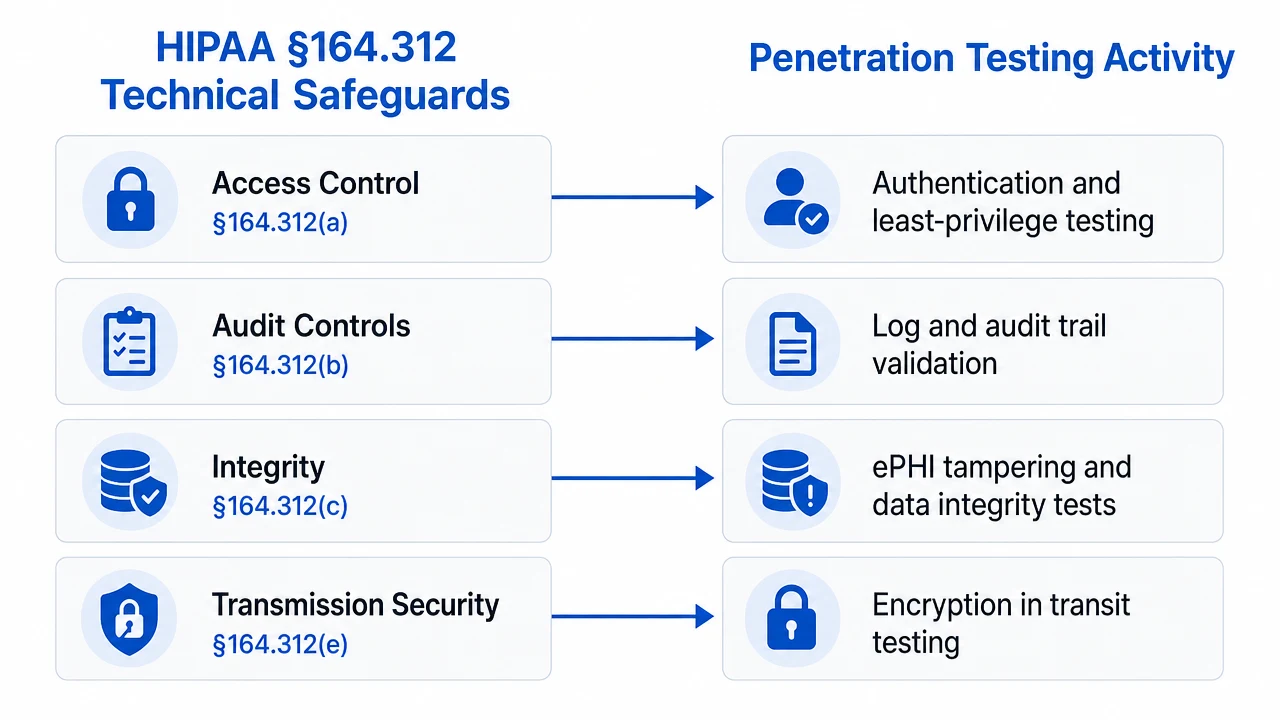
A HIPAA penetration test is a controlled attack simulation against the applications, networks, cloud services, and integrations that create, receive, maintain, or transmit electronic Protected Health Information (ePHI). HHS OCR treats penetration testing as the practical way to satisfy the HIPAA Security Rule §164.308(a)(8) technical evaluation requirement and to validate the §164.312 technical safeguards (access controls, audit controls, integrity, and transmission security).
Both covered entities and business associates are expected to perform a HIPAA-compliant pentest at least annually and after any material change to ePHI-handling systems. The 2025 HHS NPRM to strengthen the HIPAA Security Rule proposes making annual penetration testing and semi-annual vulnerability scanning explicit requirements. StealthNet's HIPAA-mapped reports are built to satisfy either the current best-practice expectation or the proposed 2026 mandate once finalized.
From PHI scope to OCR-ready report in days
Define your PHI-handling systems, AI agents probe HIPAA-relevant controls, a senior tester validates impact, and you receive evidence formatted for HIPAA Security Rule audits.
Confidential · Sample
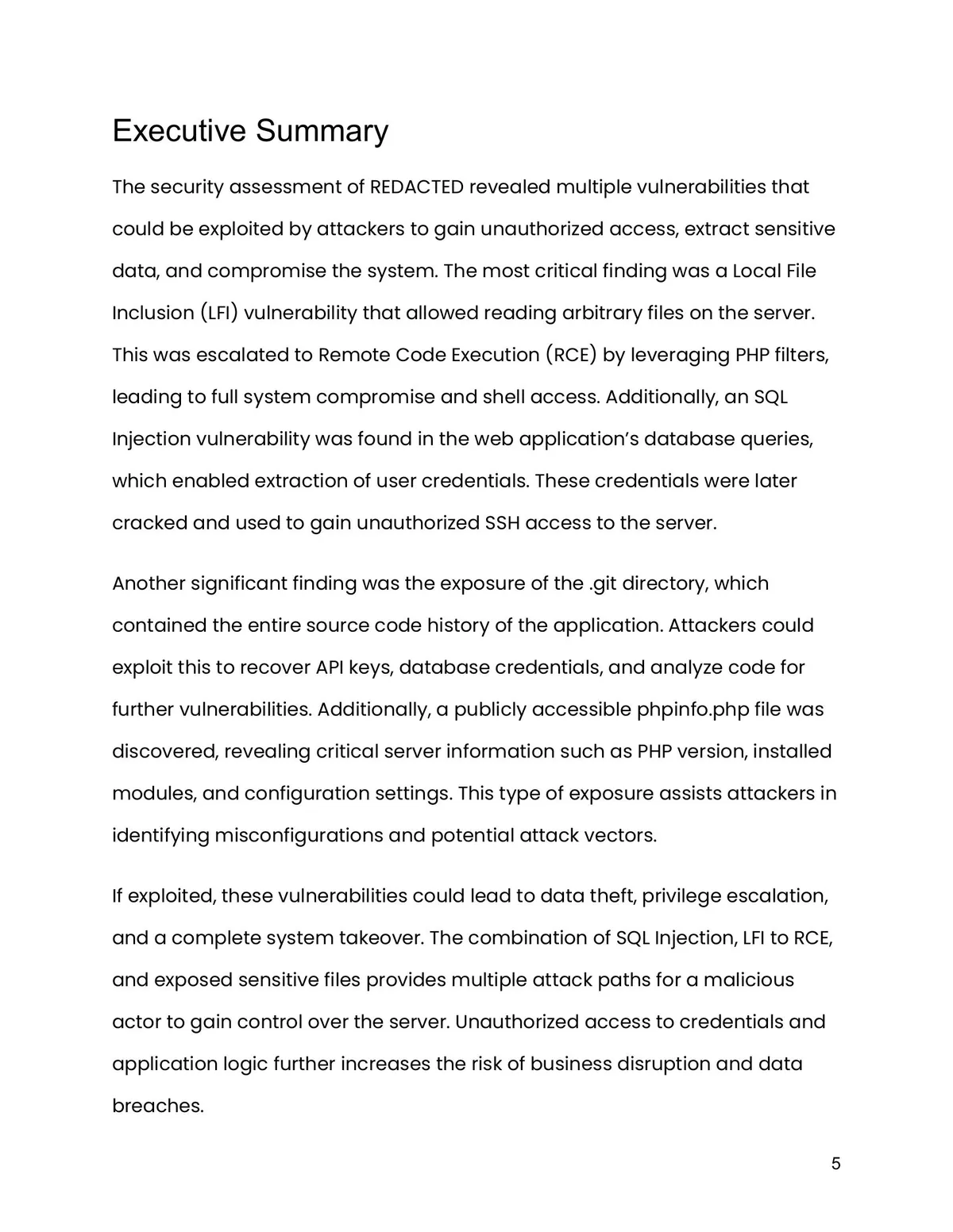






From kickoff to auditor-ready report, delivered in 48 hours.
Healthcare Breaches Are at an All-Time High.
Healthcare has recorded the highest average data breach cost of any industry for more than a decade running in IBM's Cost of a Data Breach report, and every breach of 500 or more individuals is published permanently on the HHS OCR breach portal.
HHS OCR flags your risk analysis
Auditors expect penetration testing evidence mapped to Security Rule safeguards. Generic vulnerability scans won't pass.
You're testing reactively
Post-breach testing costs 10x more. Annual proactive assessments prevent costly remediation and OCR scrutiny.
You're overpaying for compliance
Legacy firms charge $20K to $60K for the same coverage StealthNet delivers with AI pentests starting at $1,500 and hybrid pentests starting at $5,000.
How Much Does a HIPAA Penetration Test Cost?
Pentest reports built for HIPAA, not retrofitted for it. Transparent pricing for covered entities and business associates.
StealthStrike
$1,500
- 48-hour delivery
- Exploit-validated findings
- Mapped to HIPAA §164.312 safeguards
Best for: Annual risk analysis, business associate validation, proactive assessment
Hybrid (AI + Human) Pentest
Starting at $5,000
Typical engagements range from $5,000 to $10,000 depending on scope
- AI attack simulation + senior US-based pentester validation
- 48-hour first report
- Dedicated project manager + private Slack channel
- Compliance-ready report + free retest included
Best for: Post-breach remediation, covered entities with ePHI systems, OCR-facing evidence
HIPAA penetration testing cost, side by side
Legacy healthcare pentests are priced for a six-week manual engagement. Ours are priced for the evidence you actually need. See the full penetration testing cost breakdown.
| Engagement | Typical cost | Time to report | Best fit |
|---|---|---|---|
| Traditional consultancy pentest | $20,000 to $60,000 | 3 to 6 weeks | Large health systems with existing retainers |
| StealthNet AI pentest | From $1,500 | 48 hours | Annual risk analysis evidence, business associate validation |
| StealthNet hybrid AI plus human pentest | From $5,000, typically $5,000 to $10,000 | 48 hours to first report | Covered entities, OCR-facing evidence, post-breach validation |
Swipe the table sideways to see every column.
Every engagement includes a free remediation retest. Want proof first? Review a sample pentest report before you scope.
Mapped to HIPAA Security Rule Safeguards.
Access Controls §164.312(a)
Testing of authentication, authorization, and access policies protecting ePHI
Audit Controls §164.312(b)
Validation that systems properly log activity in ePHI-containing systems
Integrity §164.312(c)
Testing mechanisms protecting ePHI from improper alteration or destruction
Transmission §164.312(e)
Assessment of encryption protecting ePHI during electronic transmission
How the Pentest Maps to §164.308 and §164.312
Each row is a Security Rule safeguard, what our HIPAA penetration testing does against it, and the evidence that lands in your report.
Testing more than one framework this year? The same engagement can produce SOC 2 and PCI DSS evidence alongside HIPAA. See how the overlap works on our compliance penetration testing page.
ePHI Systems We Test
HIPAA scope is wider than most teams assume. Anything that creates, receives, maintains, or transmits ePHI belongs in the engagement.
EHR and EMR platforms
Clinical record systems, vendor-hosted modules, and the admin consoles behind them, including role separation between clinicians, staff, and admins.
Patient portals and mobile apps
Registration, messaging, scheduling, billing, and document access flows where cross-patient exposure is the most common critical finding.
HL7 and FHIR endpoints
Interface engines, FHIR APIs, OAuth-connected third-party apps, and partner integrations that move ePHI between organizations.
Connected medical devices
Device interfaces, companion apps, and management servers. Premarket device work is covered on our FDA track.
Cloud environments
AWS, Azure, and GCP accounts holding ePHI: identity, storage buckets, databases, backups, and misconfigured public exposure.
Internal networks
Segmentation between clinical and corporate networks, lateral movement to ePHI repositories, and domain privilege escalation paths.
For the wider clinical and digital health picture, see our healthcare penetration testing page. Building a regulated device? Read how FDA scope and threat modeling change a medical device pentest.
What Gets Tested, What the Auditor Receives, and How Long It Takes
A practical view of a HIPAA penetration test engagement from scoping to evidence delivery.
Need the same evidence for SOC 2, PCI DSS, or ISO 27001? See how one engagement covers multiple frameworks on our compliance penetration testing page.
Coming in 2026
The proposed HIPAA Security Rule update would make testing mandatory
HHS OCR has proposed an update to the HIPAA Security Rule that would require automated vulnerability scanning at least every 6 months and penetration testing at least every 12 months, or more often when a risk analysis calls for it. The current Security Rule remains in effect while rulemaking continues, so treat this as a strong signal rather than final legal text.
- Annual HIPAA penetration testing already satisfies the proposed pentest cadence.
- Continuous AI testing covers the semi-annual scanning floor without another vendor.
- Business associates will be held to the same expectations through their BAAs.
Business associates and BAAs
Any vendor that creates, receives, maintains, or transmits ePHI on behalf of a covered entity is bound by its business associate agreement to implement the HIPAA Security Rule. In practice that means covered entities now ask their business associates for current penetration testing evidence during vendor reviews and renewals.
We deliver a shareable summary and letter of attestation alongside the technical report, so you can answer diligence questionnaires without exposing raw findings. Preview the format in our sample report.
HITRUST crossover
Payers and enterprise health customers increasingly ask for HITRUST CSF certification on top of HIPAA. A HIPAA-mapped pentest and a HITRUST-mapped pentest overlap heavily in scope, so most teams cover both with one engagement rather than paying for two.
Read our HITRUST penetration testing guide for how the two programs line up, then tell us both targets during scoping so the report carries both mappings.
HIPAA Penetration Testing Checklist
A six-part checklist covering ePHI scope, Security Rule safeguards, testing execution, evidence, and cadence. Built from the HIPAA pentests we run for covered entities and business associates.
Most HIPAA penetration testing gaps are scoping gaps. This checklist walks through every ePHI system that belongs in scope, the §164.308 and §164.312 safeguards your report has to speak to, and the evidence HHS OCR expects to see attached to your risk analysis.
- Inventory every system that creates, receives, maintains, or transmits ePHI
- Map testing to §164.308 administrative and §164.312 technical safeguards
- Cover EHR, patient portals, HL7 and FHIR endpoints, devices, cloud, and internal networks
- Package auditor-ready evidence, remediation owners, and retest validation
- Set a cadence that meets the proposed 2026 scanning and pentest frequencies
Get the Checklist
Downloads instantly. No sales call required to read it.
HIPAA Pentest vs. Vulnerability Scan vs. Risk Analysis
Three different HIPAA evidence artifacts, three different jobs. Here's how they map to HHS OCR expectations.
AI Handles Speed. Humans Validate Everything.
A named, US-based senior tester validates every finding before your report is delivered.
Reports are mapped to HIPAA Security Rule safeguards, so there is no manual reformatting for auditors.
Most clients receive their first report within 48 hours of scoping call completion.
HIPAA Pentesting Questions
What a HIPAA Auditor Wants to See in Your Pentest Report
Reports built to satisfy Big Four assessors, QSAs, 3PAOs, and customer security reviews on the first pass.
Mapping to §164.312 safeguards
Every finding tagged to Access Controls (a), Audit Controls (b), Integrity (c), Authentication (d), or Transmission Security (e) so it slots directly into your Security Rule evidence binder.
ePHI exposure proof
Demonstrated paths to ePHI (not just CVE listings) so HHS OCR sees real risk reduction between annual risk analyses.
Risk analysis integration
Findings written in the format §164.308(a)(1)(ii)(A) expects so they drop straight into your Security Risk Analysis update.
Business associate coverage
Clear scope statement covering EHR, patient portal, cloud services, and any third-party systems with ePHI access.
Pentest Reports for Every Compliance Framework
Same AI plus human delivery model, mapped to the framework your auditor or customer cares about.
Trust Services Criteria CC6/CC7
Requirement 11.4 testing
Annex A control validation
800-53, 800-171, and CSF mapped
Level 2 (NIST 800-171) crosswalk
510(k) cybersecurity for medical devices
Moderate/High baseline pentest
EU Article 25 ICT pentest for financial entities
Pentest Services Included in Every Compliance Engagement
Every compliance pentest pulls from these test-type services as needed. Scope is sized to your environment, not padded with hours.
HIPAA Pentest Cost & Compliance Questions
Get Your HIPAA Pentest Scoped in 24 Hours
Share a few details and we'll follow up within one business day.